The UAE has never done anything quietly, whether it’s their skyline, its shopping malls, not its appetite for the exceptional. So the assumption, perhaps, was understandable: that a country defined by superlatives had no time for the slow and consciously made. That sustainability was someone else's conversation — Copenhagen's, maybe, or Portland's. It was never quite true, now it is probably false.
According to Euromonitor International, the UAE apparel market is set to outpace the global industry average through 2030 — growing at 5% annually against a global rate of 3.7%. And according to YouGov, more than half of shoppers across the UAE and KSA already make a deliberate effort to buy only from brands they consider socially and environmentally responsible. On Earth Day 2026, ten of them deserve your attention.
Reemami
Palestinian designer Reema Al Banna founded her womenswear label in Dubai in 2009, before "conscious fashion" was a marketing talking point, before deadstock was desirable, before anyone in this region was using the word "seasonless" without irony. From her Sharjah base, Al Banna built a practice defined by GOTS-certified organic cotton, zero-waste production, and an absolute refusal to design for trends. Offcuts become headbands. Leftover denim becomes deadstock gold. The aesthetic is graphic and joyful, pattern-clashing in the very best way, and a printed Reemami co-ord, worn as-is with nothing more than a pair of white sneakers, is your answer to everything from a Thursday brunch in Jumeirah to a gallery opening at Alserkal.
The Giving Movement
Founded by British expat Dominic Nowell-Barnes in 2020, The Giving Movement has since become one of Dubai's most recognisable homegrown fashion exports. Every piece is made from recycled nylon and organic bamboo, manufactured entirely within the UAE, where workers receive a living wage and a two-day weekend. AED 15 from every purchase goes to charity; over $2.4 million donated to date. Jennifer Lopez has worn it. The region is obsessed with it. And unlike most sustainability narratives, this one holds up under scrutiny, as at home at a Kite Beach morning walk as at a casual lunch where the only thing overdressed is everyone else's fast-fashion co-ord.
Sustainably U
Founded in Dubai by Simmy, a new mother who wanted to build a better world for her son and ended up building a fashion brand instead, Sustainably U is as honest an origin story as this industry gets. Made in Dubai, with a two-year warranty and a free repair service built into every purchase, Sustainably U the brand produces tailored linen trousers, fluid shirts, abayas and occasion sets in organic fabrics sourced as locally as possible, all made in order to eliminate overproduction entirely. The pieces are clean-lined and quietly confident, the kind of wardrobe that doesn't announce itself but is always the most interesting thing in the room.
By M.A.R.Y
By Mary was founded in Dubai in 2019 by Marie Hosatte, who grew up between continents and built a label that carries both worlds with intention. Every piece is handcrafted in the brand's Dubai workshop on an on-demand model, keeping overproduction off the table by design, using organic silk, organza, cotton and delicate laces in silhouettes built for a slower relationship with getting dressed. The latest collection, The Atelier, balances ethereal textures with structured forms, and beyond the clothes, the brand supports girls' education in Africa and environmental conservation through Azraq. A By Mary piece reads exactly as intended at a gallery opening or an intimate dinner: thoughtful and impossible to place in a trend cycle.
Only Ethikal
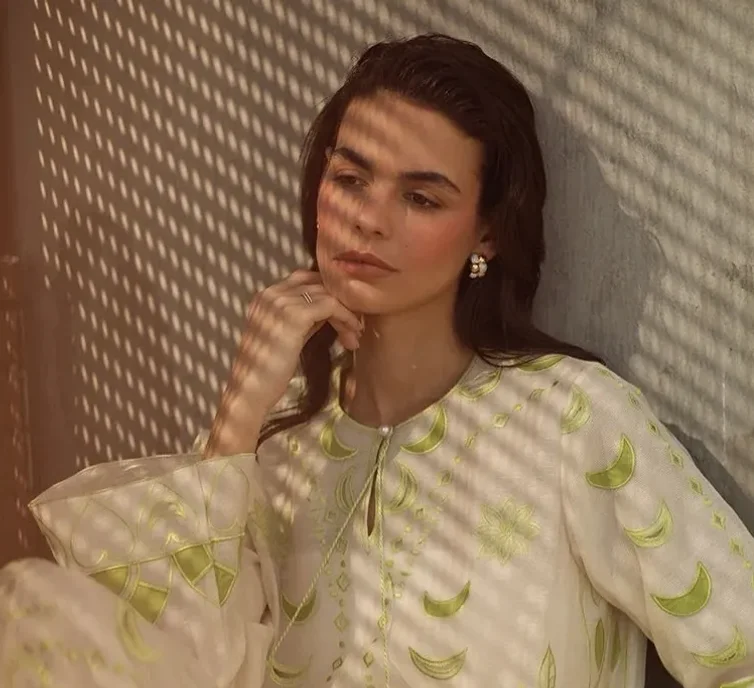
Founded in Dubai by Deepthi Chandran Joyau, Only Ethikal began with a simple and quietly radical decision: to start a conversation about ethical fashion in every shopper's wardrobe, and to make that conversation easy to act on. The platform curates clothing and accessories from handpicked artisans and designers around the world, all of whom produce using natural materials, rescued fabrics and traditional or modern craft techniques, with fair wages and safe working conditions non-negotiable across the board. It exists because the alternative is worse than most people realise — fashion remains the world's second biggest polluter after oil, a statistic that sits uncomfortably alongside a mall receipt. Only Ethikal is a market with great styles relevant for the GCC resident, check out their emerald green jalabiya.
Dunesi
Finnish founder Hanne Ripsaluoma launched Dunesi in Dubai on a principle both obvious and radical: the most sustainable fabric is one that already exists. Working entirely with discarded luxury stock and pre-loved denim, the label hand-reimagines them into structured jackets, statement dresses, skirts and handcrafted shoes, each piece one of a kind and produced in small batches that leave nothing wasted. In an industry where denim is one of fashion's heaviest environmental offenders, Dunesi is the counter-argument.
Glossy Lounge
Natasha Zaki founded Glossy Lounge for the woman who wants luxury and comfort and sees no reason to choose between them, or between looking good and doing something meaningful. The brand works with GOTS-certified organic cotton, bamboo, and upcycled materials across both clothing and packaging, and has partnered with Emirates Nature, the regional arm of the WWF, so that every purchase contributes toward mangrove conservation across the UAE. This is, in every sense, a local story: homegrown, locally purposed, quietly radical. The ideal answer to "What do I wear at home that I also won't regret being seen in?" Elevated, matching, and with roots that go deeper than the fabric.
Kaleidoscope by Mimi
Mimi Shakhashir built Kaleidoscope by Mimi out of a life spent moving — between cultures, continents, and craft traditions — and the brand wears that restlessness beautifully. Based in Dubai, the label sources raw materials directly from artisan communities, partners with NGOs, and channels profits back into education and entrepreneurship initiatives for the craftspeople involved. The result: kaftans, kimonos, and richly printed dresses that feel simultaneously global and deeply personal. One Kaleidoscope kaftan, belted or worn loose over a swimsuit at Bab Al Shams or Anantara Eastern Mangroves, is a travel piece that renders every other packing decision irrelevant.
Sara Al Tamimi
Emirati designer Sara Al Tamimi launched her Abu Dhabi label in 2020 with a clear position: luxury and ecological responsibility are not a trade-off. Collections are built from GOTS-certified silk, Oeko-Tex ponti, ethically sourced Egyptian cotton and vegan leather, with buttons engineered from a waste-free alloy and eco-plating that conserves water. Accessories have stretched to cactus leather mules and salmon skin belts. Worn by Adriana Lima and a fixture in Vogue’s pages, Tamimi is the rare case of a designer who makes sustainability feel like the most glamorous choice in the room.
Abadia
Abadia occupies a particular space that is rare in this region: genuine luxury and genuine ethics, without apology or compromise. The brand partners with artisans from across the Arabian Peninsula to produce pieces that are culturally specific and entirely contemporary, think fluid abayas, structured kaftans and draped eveningwear cut with quiet authority, using luxury deadstock materials, with every person in its production chain fairly compensated. There is a lot of authenticity to Abadia that feels meaningful in a city always looking outward, a label that says something about where you actually are. The kind of thing you reach for at dinner at Zuma, a wedding in Abu Dhabi, an evening at d3, wherever the occasion asks for something that does not need to explain itself.