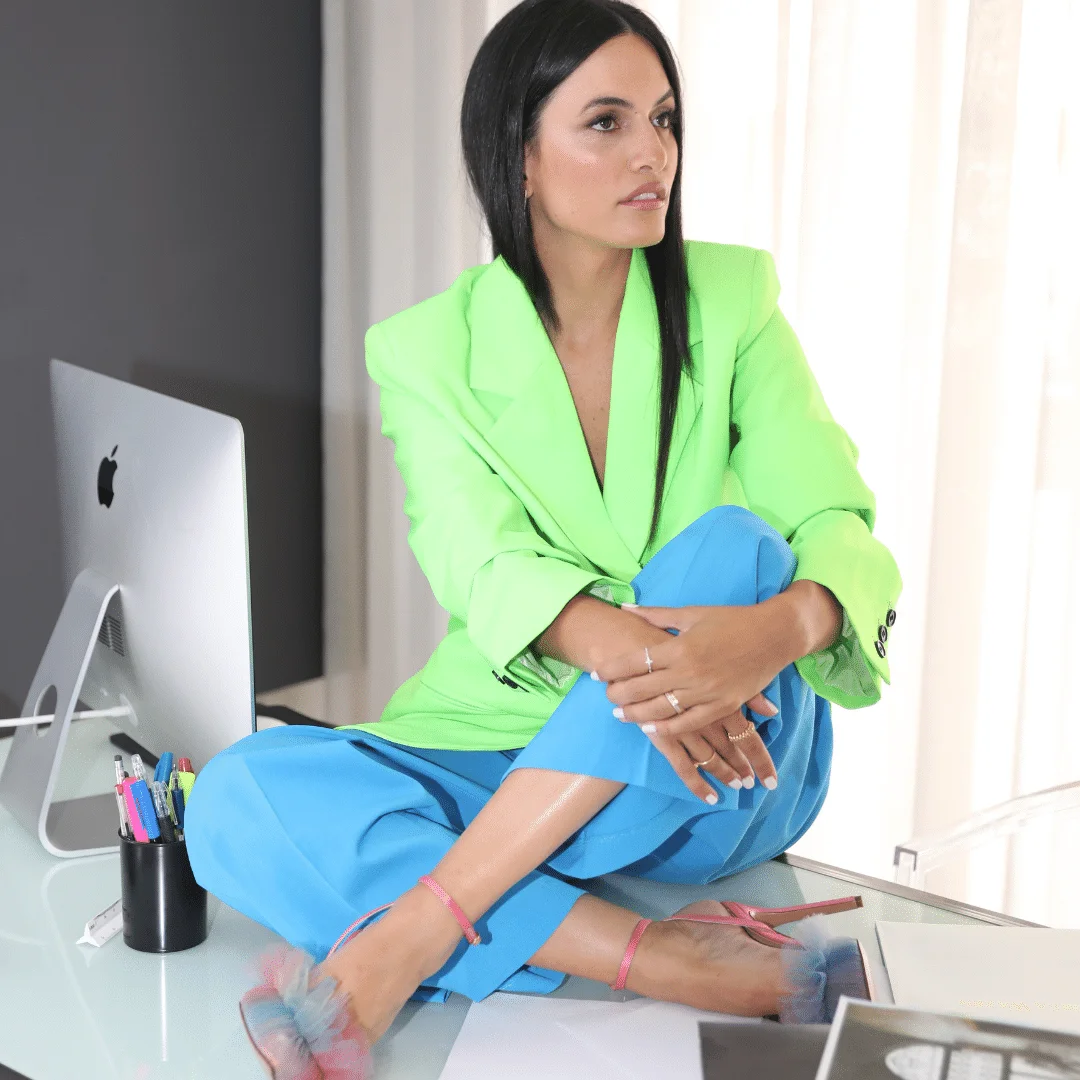
Two young and passionate girls sit facing each other in a corporate setting, both representing their companies, and for them – their powerhouses. Amidst the crisp air of formal conversation, a few words of supporting South Asian talent unravel. This conversation was meant to tighten their roots, and brought wide smiles to their faces. Dania Ali, Founder of heritage brand Lajwanti, and our Editor, Vama Kothari come to bring to light the power and influence of Asian fashion. Both had a similar vision for the cover of Masala’s January issue — longing to highlight south Asian fashion to a global audience.
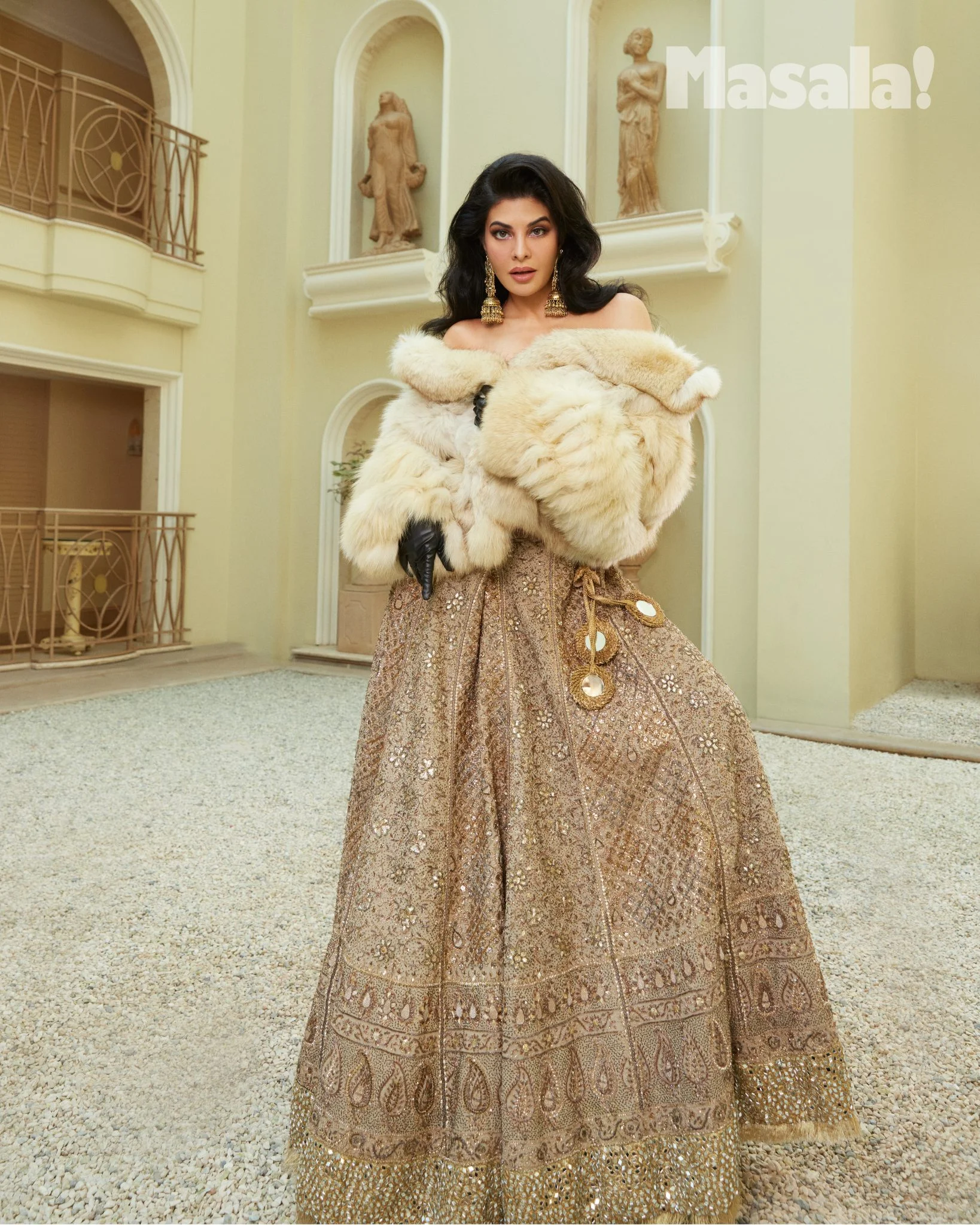
Lucky for them, their choice of muse — Jacqueline Fernandez, is a multicultural Bollywood actor, who has made a rising case for herself not just as an actor, but also as a performing artist. She fit the bill instantly. Before they deep-dove into a conversation about Jacqueline, Dania explains the story behind her brand, and how their work is a matter of pride for Indians and Pakistanis. Established in 1995, Lajwanti is a pioneer Pakistani fashion brand. This is a luxury label that pays homage to its rich Mughal heritage through sophisticated bridal wear augmented by high-grade fabrics and fine hand-done craftsmanship. Lajwanti – since its inception, has been an influential force in shaping the codes of Pakistani bridal couture.
The 24-year-old founder says, “Our latest collection titled Azal — meaning beginning, is an ode to India and Pakistan’s shared heritage and love found in ancient subcontinental architecture and folklore. Designers from across the globe have been walking outside the lines of their country’s borders in order to gain both recognition and harness inclusivity in fashion — as has Lajwanti. From the year 1995, Pakistan’s pioneer fashion label has boasted national acclaim to international headlines. “However, I believe, to truly expand with meaning, one must start with thy neighbour, and for me, it was India — where our traditions, culture, and heritage are closely intertwined, where fashion follows a similar handbook and many act as a bridge.”
This encourages a stronger relationship between the Editor’s vision for her cover, who tries to marry Lajwanti’s values into the glamorous world of Bollywood.
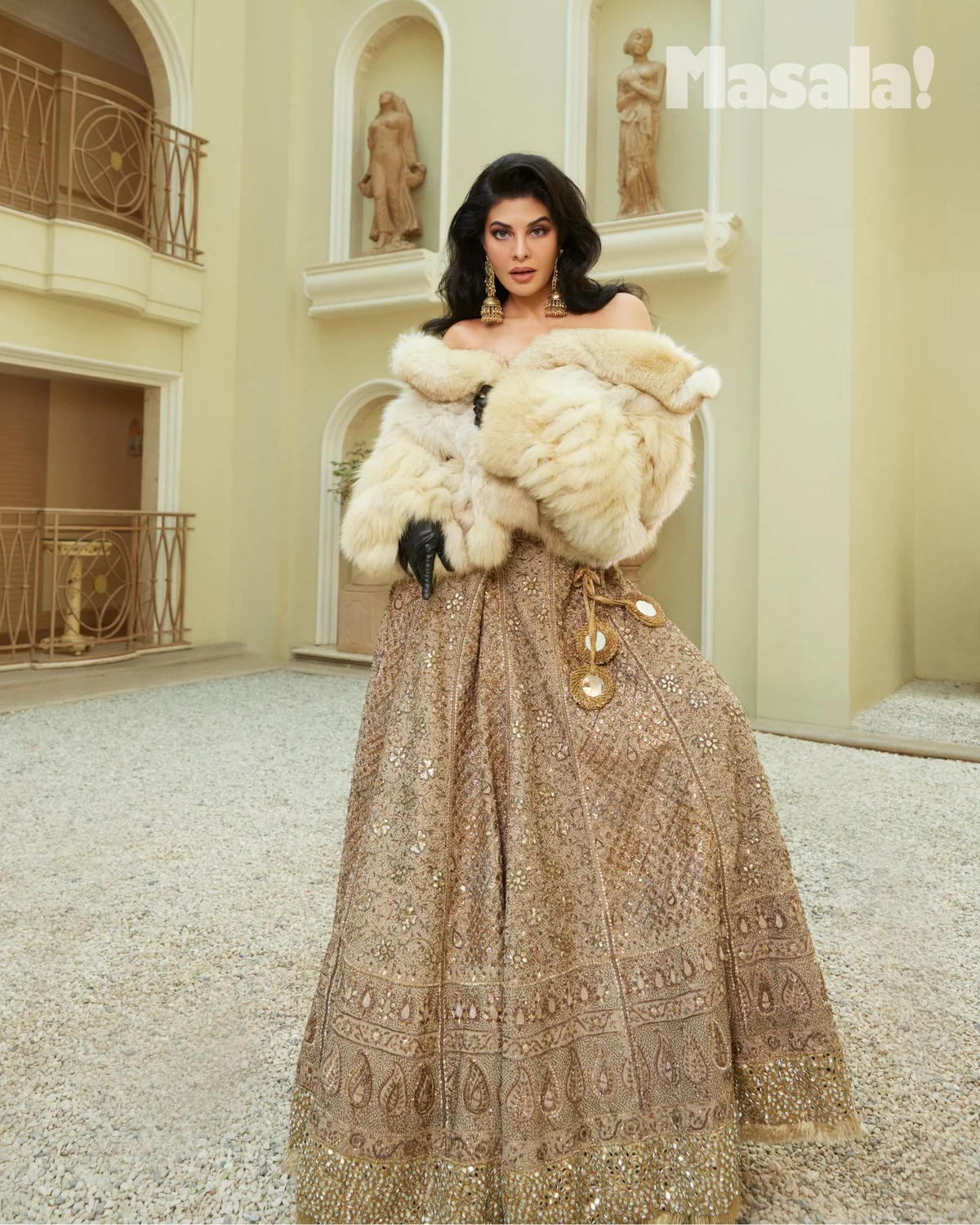
Masala: How has your professional life been lately, and what are you working on that’s keeping you motivated?
Jacqueline: “Work has been crazy busy. I’ve just released a film called Cirkus. This is my fourth film of the year. Releasing four films in a year can be pretty chaotic, and in the middle, we keep shooting for brands, reading scripts, training for films, etc. So, I am looking to take things slow for a while before my next project — which is in the lines of action.”
Masala: What is that one thing about the South Asian community and culture that others do not have?
Jacqueline: “Being a South Asian from India myself — I think it’s got to be spirituality. I am not saying religion, but a profound sense of grounded spirituality. This tends to reflect in our personal lives, may it be with family, loved ones or even colleagues. This sets us apart from many.”
Masala: What is different about Bollywood now as compared to 10 years ago?
Jacqueline: “Well…so the Bollywood I was in 10 years ago, was extremely different compared to now. We didn’t have social media. Right now we have strong access to social media now, OTT platforms, hashtags, etc. We are discovering so many new stories, different people, different lives. Bollywood (we are) is getting more creative at storytelling. We’re also discovering so many new talents, more discussions, new debates… we are evolving, and it’s only for the better.”
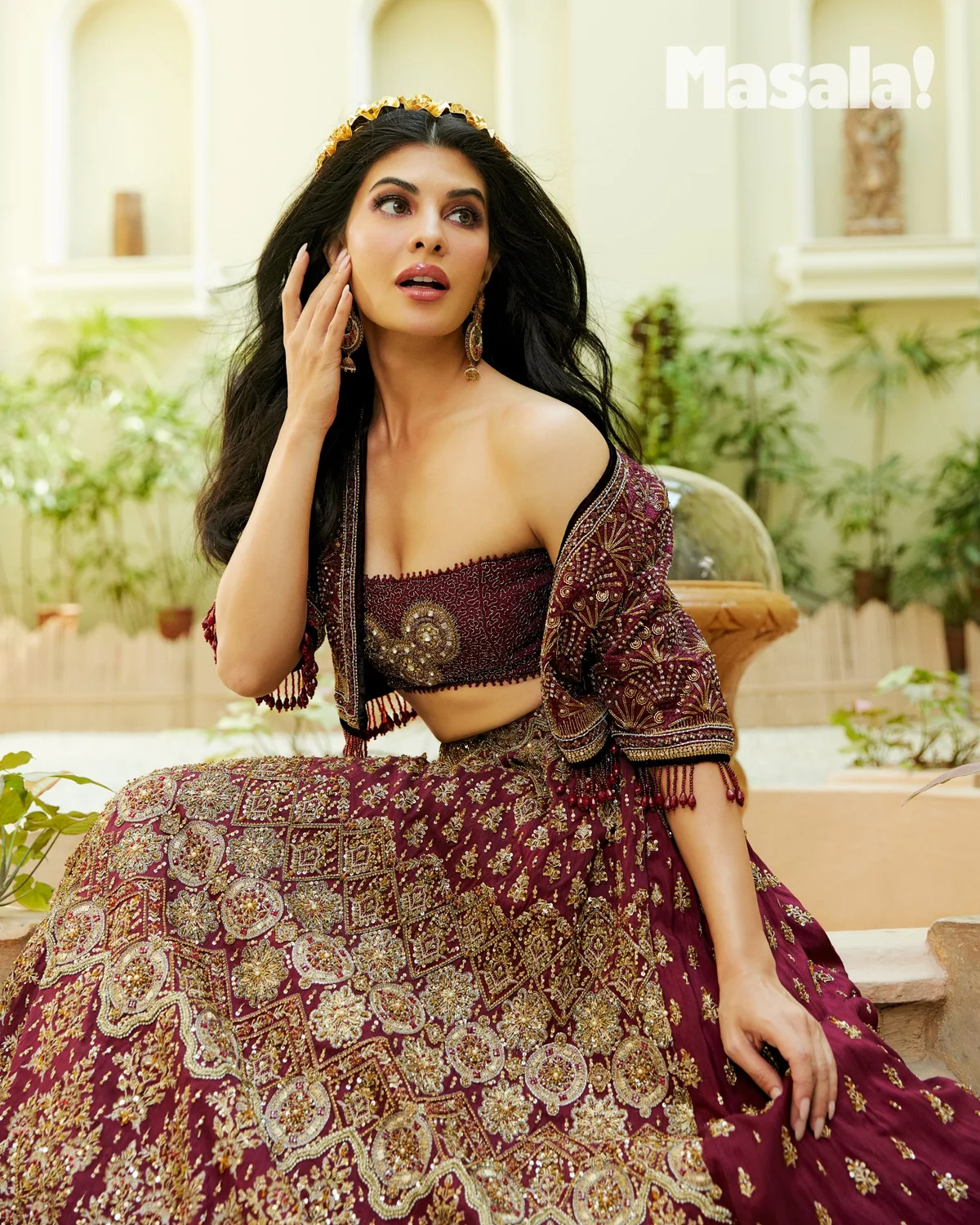
Masala: Tell us a bit about your cultural background and heritage, what is it like to be from a multicultural background?
Jacqueline: “My father is a Sri Lankan, my mother is of Malaysian origin, and I grew up in Bahrain, the Middle East. I went to a convent school run by Italian nuns. A lot of Asian cultures we prevalent in my school. There were kids from India, Sri Lanka, the Philippines, and of course there were Arab kids. So, I felt like I was a part of an international setting while growing up. I think this is so important, because this is how the the world is right now anyway. So many cultures come together wherever you look. The good part about growing in this space was I had access to so many cultures, religions, languages from a young age — this way you tend to become more grounded and acceptive towards everybody. I am very grateful that I was able to inculcate these traits from a young age.
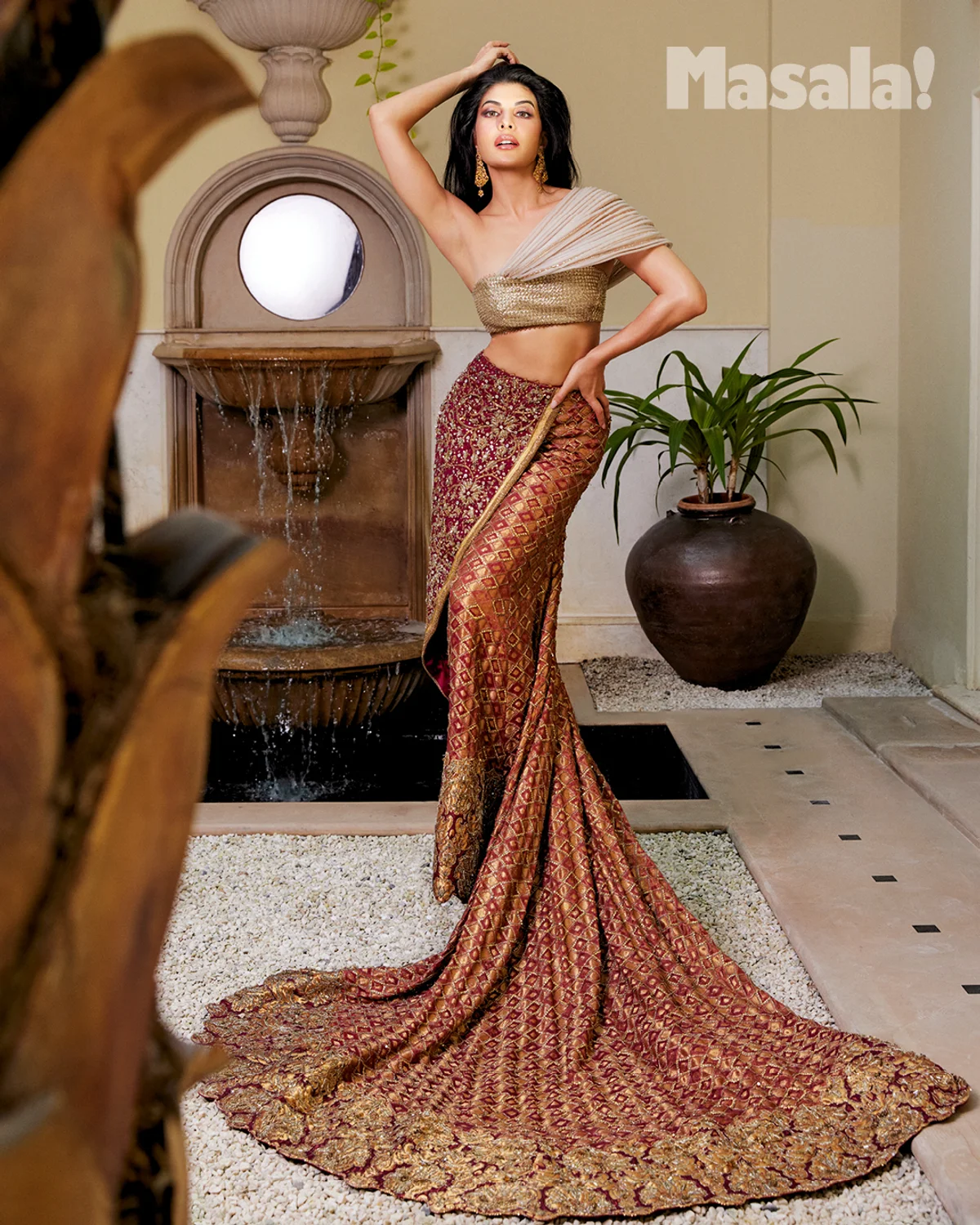
Masala: What were some challenges you overcame not being from this industry, was India welcoming when you first joined as an artist?
Jacqueline: “When you come in, you come in very wide-eyed, naive and vulnerable. You don’t know anybody or anyone — or if the advice you are getting is the right advice. You tend to make a lot more mistakes as compared to, let’s say if you were protected by a strong support from the industry. They’d would be able to guide you on what’s what, who’s who, how it works, on what you need to do or what you don’t. So, these are challenges that I faced too, until I navigated my way through them. In fact — I did not think India was going to be a permanent home for me. I only stayed because it was so welcoming and encouraging. I’d say the industry was good to me, being an outsider. Being young(er) back then and what I’d like to think as happy-go-lucky helped me take every challenge positively.”
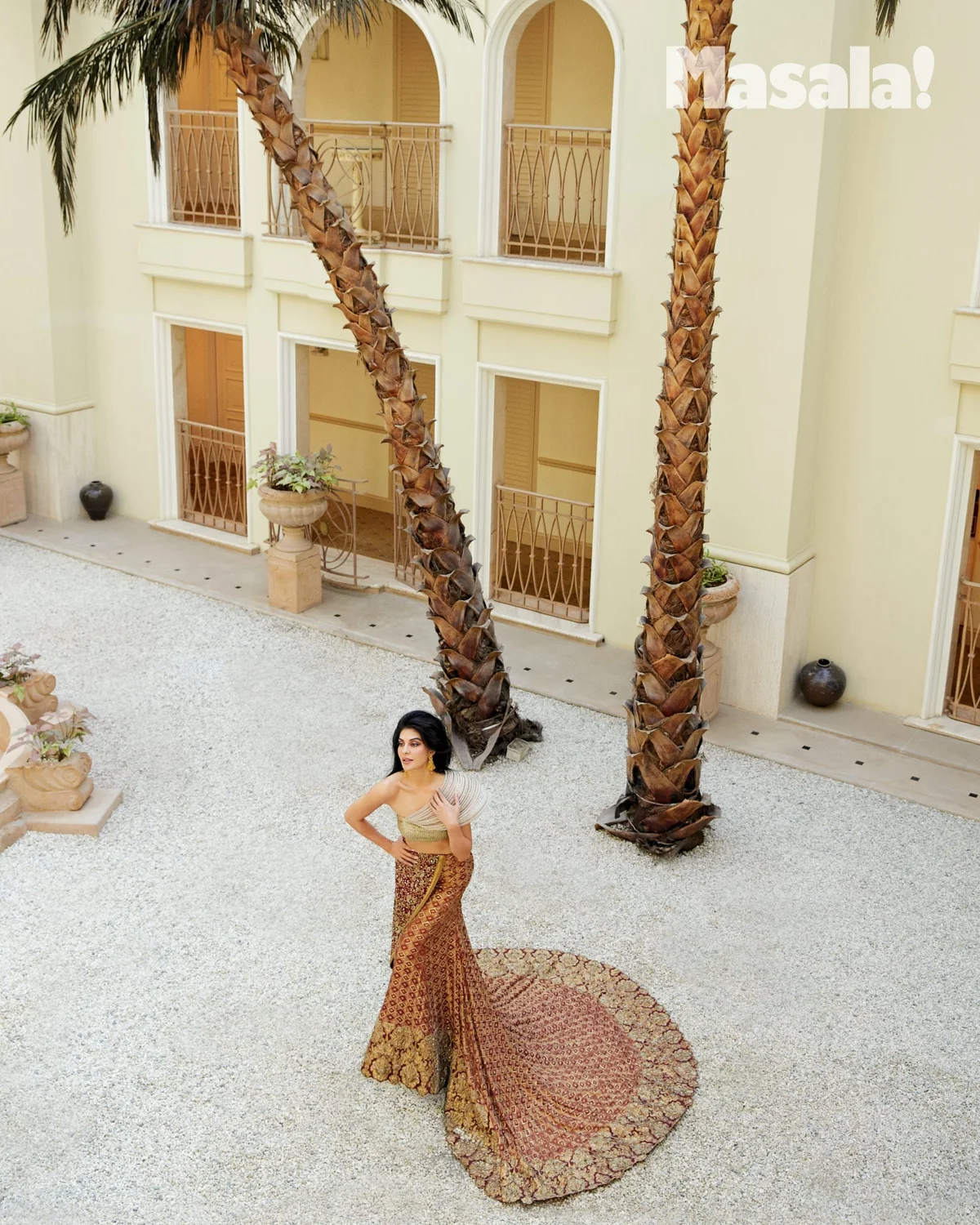
Masala: What or why do you think, now more than ever, the west has started appreciating Asian culture & practices? It was once mocked and frowned upon. What do you think has caused this collective rise for us, as a community?
Jacqueline: “Earlier there wasn’t enough understanding about our culture, and there wasn’t enough organic exposure either. Everyone has apprehensions in the beginning about something they don’t fully understand. I think now South Asia has become so much more globalized. We are known for many practices — may it be for beauty or gastronomy… it feels so empowering to see the world open up to our strong suit. In fact, I have a sister in the United States who’ll keep asking me to send her haldi every now and then! When we, so easily, get to make it a part of our daily lives.”
Masala: 3 fashion designers you admire and see yourself working with in the future?
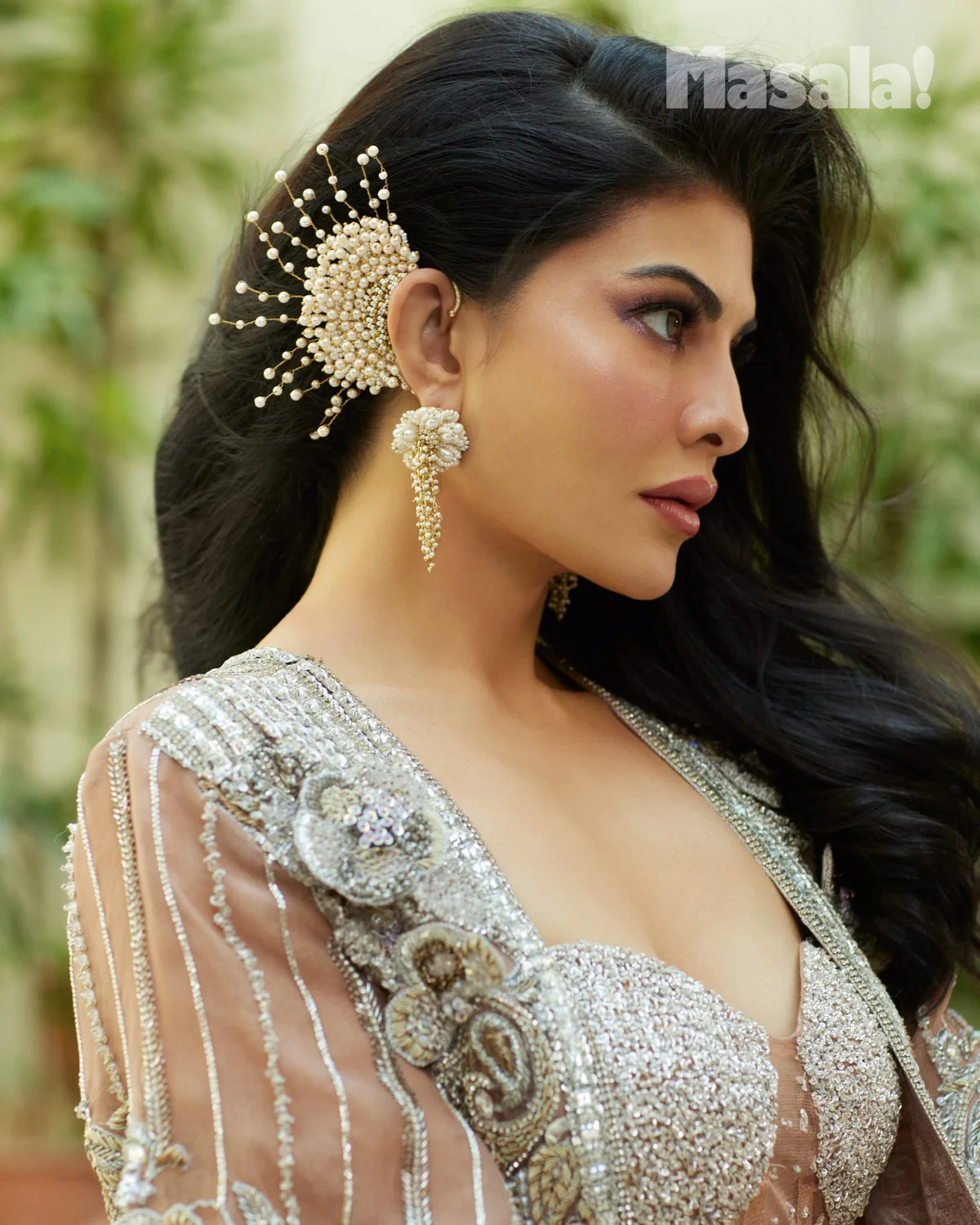
Jacqueline: “I really like what Dhruv Kapoor is doing. I think he is setting the standard high up with unique designs that are international yet Indian at the same time. Someone that I’ve always turned back to pretty much my whole career have been Falguni and Shane Peacock. Even Manish Malhotra! His creations really make you feel like an Indian process. He understands Indian wear so well, and he also studies the fashion and the female body type with great interest. I also want to bring special spotlight one of my all-time favourite designers from Sri Lanka — her name is Darshi and she makes beautiful Batik saris. Also, an overall observation is that the world is turning a lot to Middle Eastern designs for beautiful red-carpet moments. Their gowns and wedding dresses are so admirable. To name a few, Zuhair Murad, Elie Saab are my favourites.”
Masala: What about Middle Eastern people stands out to you?
Jacqueline: “I grew up in the Middle East, in Bahrain, so all of my childhood friends are still there. Honestly, I had a great childhood growing up in Bahrain — it was safe and welcoming. They hold culture very close to them, and know how to live larger than life. Middle Easterns have become a part of global map.”
Masala: Whose fashion sense in the Bollywood fraternity stands out the most to you?
Jacqueline: “I think when it comes to the styling game, a lot of people come to my mind. But one that has stuck with me is Rekhaji. Even back then, her photoshoots were so creative! So inspiring and ahead of her time. Fast-forward to now — those saris that she wears… gosh, to die for. The way she accessories herself, the way she carries her attitude. It’s so admirable. Amongst so many others I’d have to say Sonam. (Kapoor) She not just carries herself so elegantly but she also introduces the Indian space to so many international designers that we had no idea about. And credit to Rhea Kapoor too — they make a great team together. I find Kangana’s (Ranaut) style is very unique too. I even love the way Deepika (Padukone) dresses.
Masala: According to you, where does your sex appeal lie?
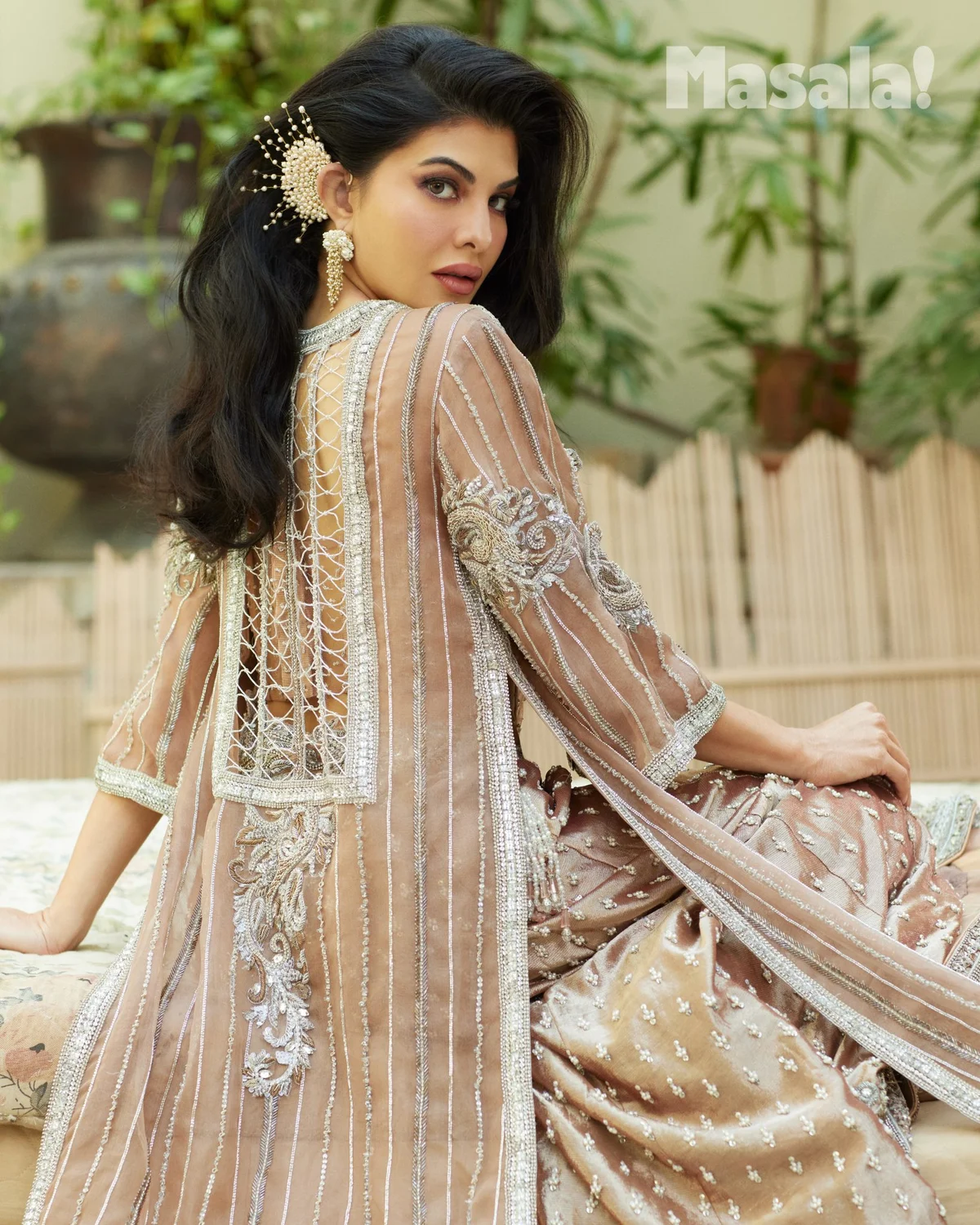
Jacqueline: “To be frank I’ve never seen myself as someone with sex appeal. I know in the roles I play in movies, or the songs I perform in can exude that, but our audience can mistake it for what our real personality is. You lose your appeal when you push things a bit too much or try too hard. For me, that fact that I’ve fully accepted what I am, and how I can be, is honestly where my sex appeal lies.”